
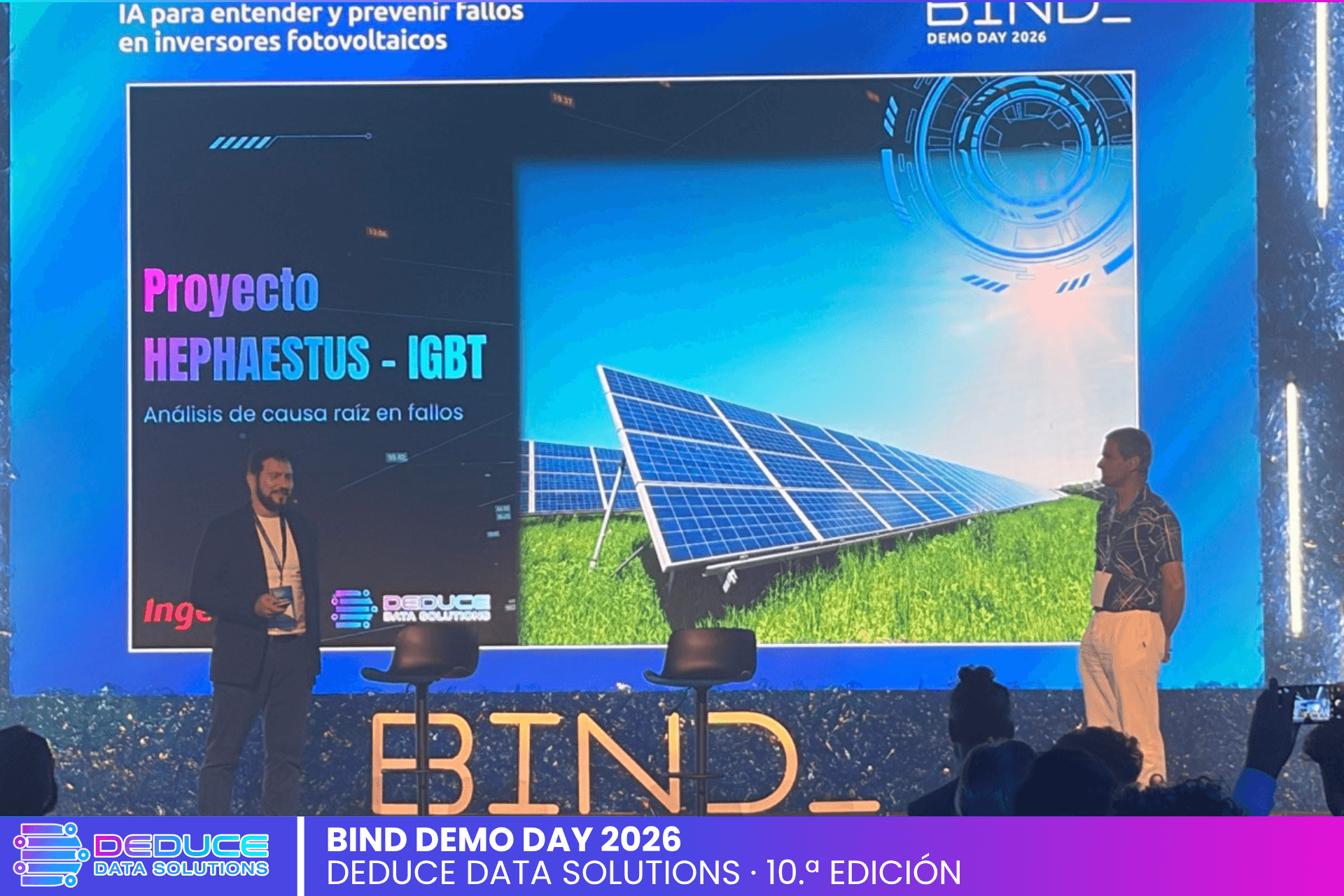
On 2 July, the Bilbao Exhibition Centre (BEC) hosted the Demo Day of the BIND programme, the annual event that closes out each edition of the Basque Government’s open innovation platform. For Deduce Data Solutions it was a special date: we wrapped up our participation in the 10th edition of the BIND programme with a real artificial intelligence project applied to the energy industry.
In this article we tell you, first-hand, what the BIND programme is, what the Demo Day was like for us, what our collaboration with Ingeteam consisted of, and the five key takeaways that explain why this experience has been so relevant for an industrial AI startup like ours. No hype, just verifiable data.
What the BIND Programme Is and Why It Makes a Difference
The BIND programme (formerly known as «BIND 4.0») is the Basque industry’s open innovation platform. It is a public-private initiative driven by the Basque Government’s Department of Industry, Energy Transition and Sustainability through the SPRI Group.
It was launched in 2016 with a clear goal: connecting startups from around the world with Euskadi’s large companies and leading SMEs to develop joint technology projects. It is not an ideas competition; it’s a bridge to real contracts and projects.
The BIND programme is organised around several areas: smart industry, efficient organisation, commercialisation, and energy and sustainability. Selected startups work hand in hand with a leading industrial client.
Three features make it different. First, it takes no equity in the startup and charges no fees. Second, it wraps the project in an acceleration programme with mentors, training and access to investors. Third, its institutional backing is solid.
The figures back that up. According to the SPRI Group, in its first decade the BIND programme has generated around €10 million in contracts between Basque companies and startups (source: SPRI, 2026).
It is worth understanding the term «lead company» (“empresa tractora”). These are the large companies and industrial SMEs that pose the real challenges and act as the client for the selected startup. Dozens of them take part in each edition, multiplying the chances of a match between an emerging technology and a specific need in the production fabric.
That «challenge first, technology second» logic is what sets this initiative apart from other acceleration programmes more focused on investment or generic training. Here, the starting point is always an industrial problem that someone genuinely needs to solve.
The Demo Day on 2 July at the Bilbao Exhibition Centre
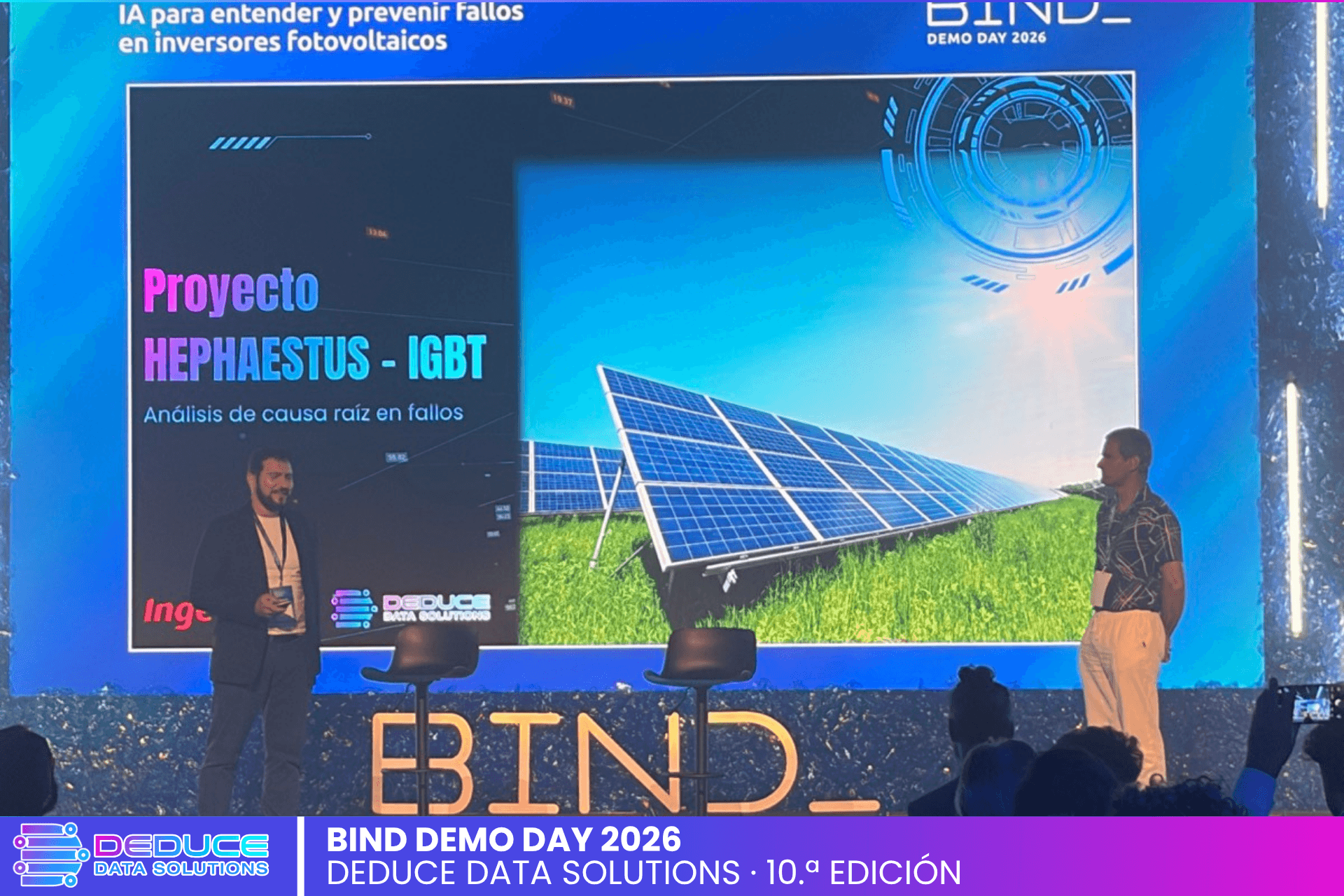
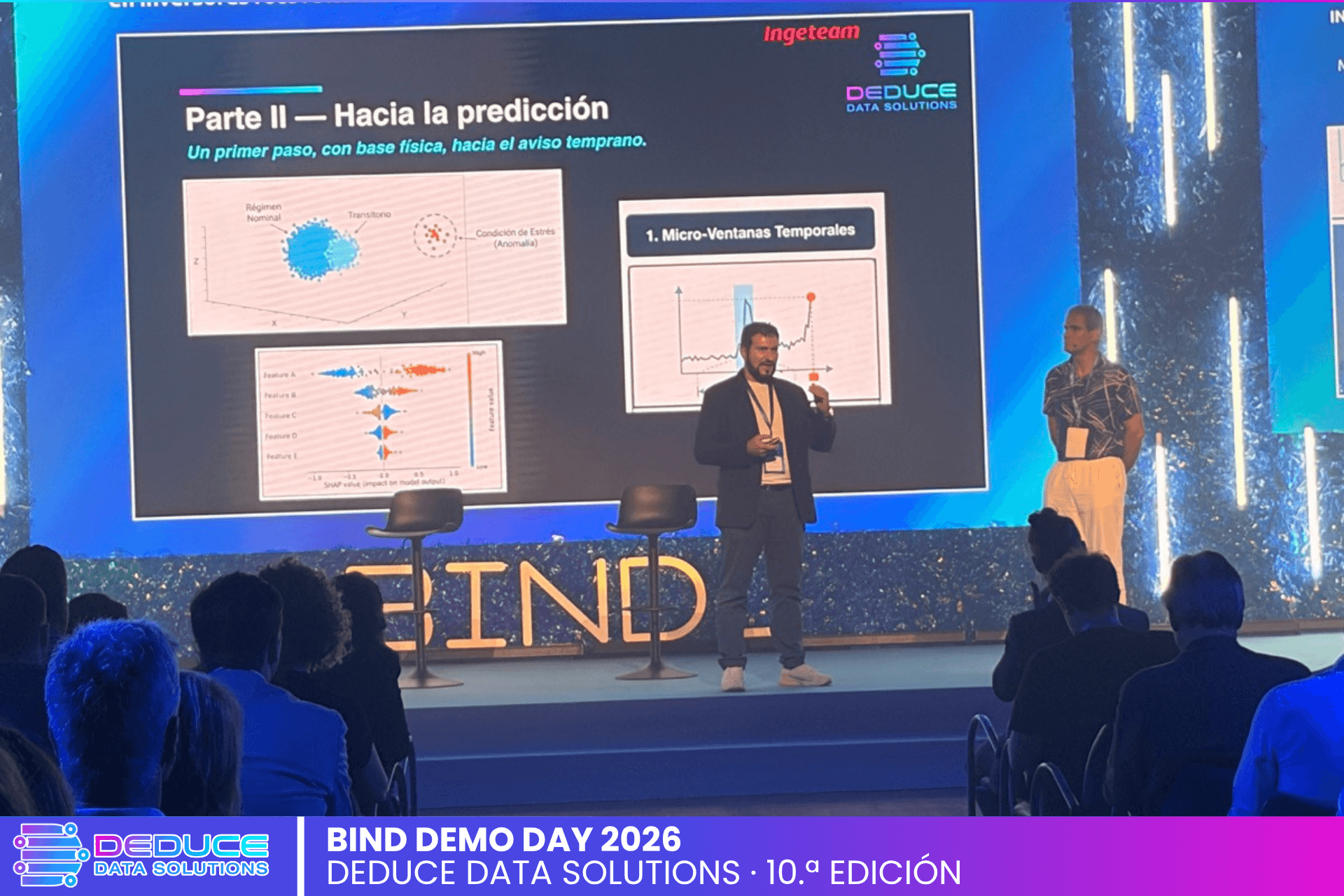
The Demo Day is the moment when startups and lead companies publicly showcase the projects developed during the edition. This year it was held on 2 July at the BEC in Barakaldo, closing out the 10th edition of the BIND programme.
It was a day of intense networking, with presentations of solutions focused on process optimisation, maintenance and monitoring, energy and sustainability, cybersecurity and customer experience. The BEC confirmed it was hosting the tenth edition of this Demo Day (source: Bilbao Exhibition Centre).
For us, taking the stage at the Demo Day wasn’t a formality. It was the culmination of months of technical work and the chance to show the Basque industrial ecosystem what explainable AI brings when applied to a real problem.
The Figures from the 10th Edition
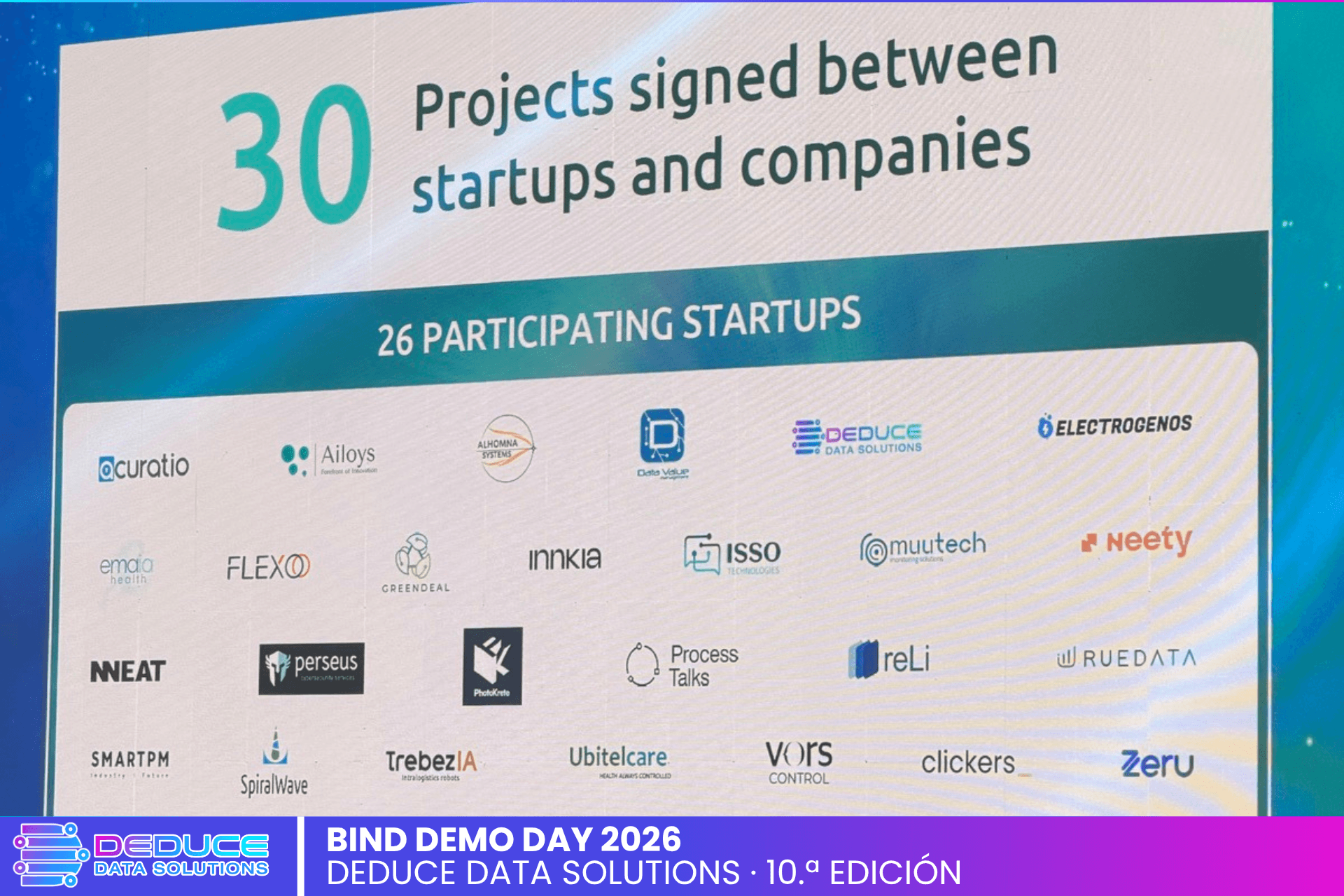
Getting into the BIND programme isn’t easy. In our edition’s call, Deduce Data Solutions was one of the startups selected from 882 applications from 74 countries (source: Deduce Data Solutions, awards and recognition page).
That level of competition is precisely what gives the selection its value. It’s not just another badge: it’s a demanding filter that confirms the technology is ready to deliver value to industry.
How a Startup Is Selected for the BIND Programme
The process is competitive and runs in stages. It all starts with worldwide open registration, where startups describe their technology and its level of maturity. From there, the organisation assesses the fit with the challenges posed by that edition’s lead companies.
The applications that fit best move on to an interview and «matching» phase. Having brilliant technology isn’t enough: you have to show it solves a specific challenge for a specific company. That pairing between startup and challenge is the true heart of the model.
Once the fit is confirmed, both parties sign a letter of intent that shapes the project: objectives, scope, phases and timelines. It’s the document that turns a good conversation into a working commitment. In our case, that was the starting point of the collaboration with Ingeteam.
This rigour explains why the programme’s stamp of approval carries weight in the market: it doesn’t reward intentions, it validates execution on a real problem.
DDS in the BIND Programme: From Selection to Real Project
Within the 10th edition, we were selected to respond to a challenge posed by Ingeteam, one of Euskadi’s leading industrial names. The collaboration was framed entirely within the BIND programme and formalised through a letter of intent between both companies.
The challenge was set in the field of photovoltaic solar energy. In general, communicable terms, the goal was to improve the quality and reliability of photovoltaic inverters through root-cause analysis of failures in critical components.
This is where DDS’s DNA comes in. We apply explainable artificial intelligence to real field data to understand why certain failures occur, distinguish operational factors from other hypotheses, and lay a technical foundation for a future predictive maintenance strategy.
The key word is «explainable». We don’t hand over a black box that predicts without justifying. We deliver traceable analysis and a reusable data product, so the client’s team understands how the variables interact and why the results occur.
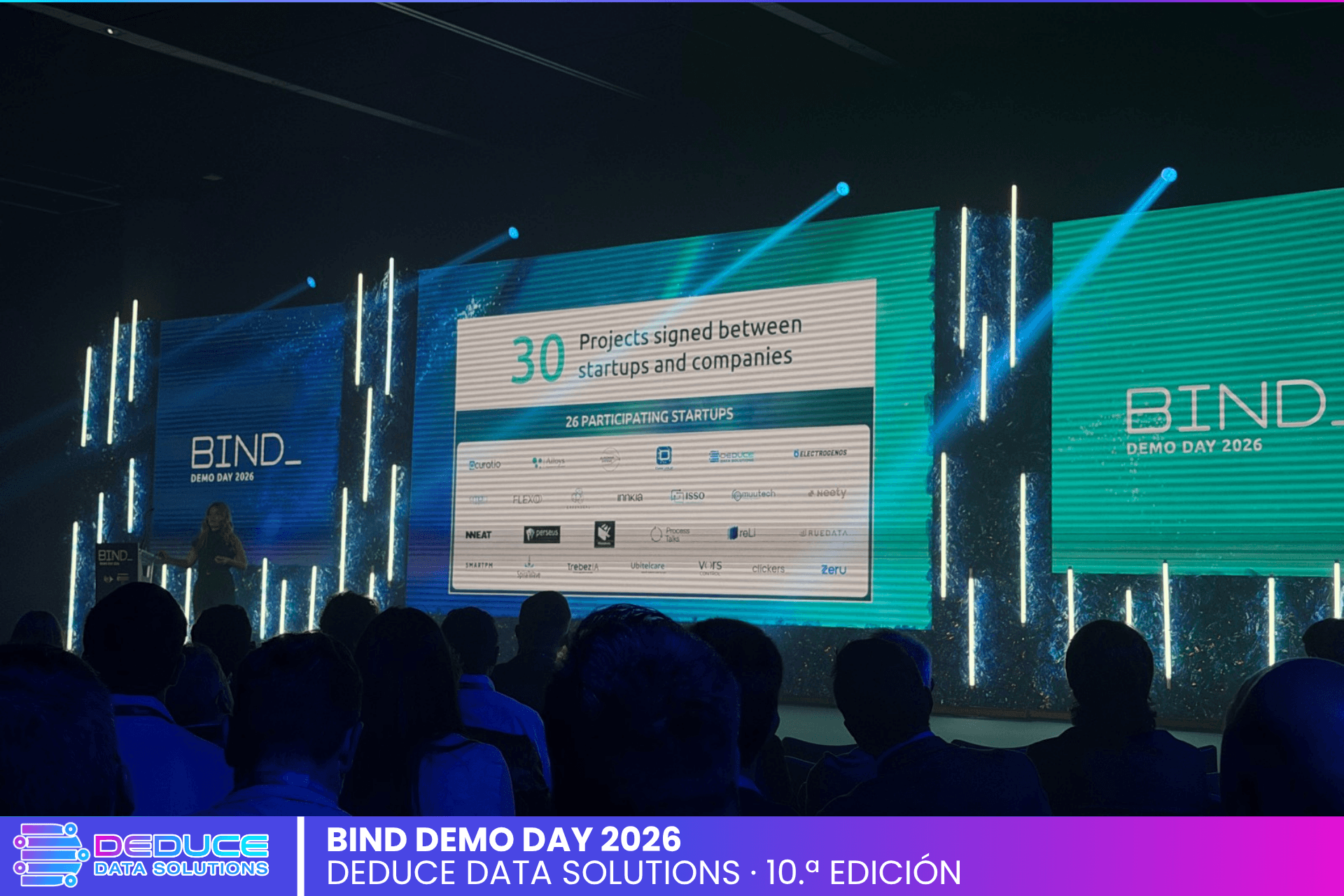
Our CEO, Diego Tuccillo, summed it up like this during his talk at the Demo Day:
“We’ve gone from a black box to understanding the mechanisms behind the failures, and laying the groundwork for future predictive maintenance.
Diego Tuccillo, CEO of Deduce Data Solutions
Out of respect for the project’s confidentiality, we don’t share financial figures, brands or specific models here, nor fine technical detail. What matters for this article is the method and the fit, not the client’s sensitive data.
The DDS Method Within the BIND Programme
The collaboration was structured as a scoped project, with execution concentrated in the first half of 2026 and organised into successive phases: technical diagnosis and hypothesis-building, building the data product and pattern analysis, and closing with root-cause analysis and recommendations.
This format (diagnosis, scoped pilot and actionable close) is the «DDS method» we have systematised over the years. It fits naturally with how the BIND programme works and reduces risk for both parties, because each phase produces verifiable value before moving forward.
Working shoulder to shoulder with the client’s business engineers is an essential part of the approach. Plant knowledge, often tacit, is as valuable as the data itself: without it, any model falls short.
Why Explainable AI Matters in Solar Energy
To understand the value of this kind of project, it helps to recall what a photovoltaic inverter does. It is, in essence, the heart of a solar plant: it converts the direct current generated by the panels into usable alternating current that can be fed into the grid.
When an inverter fails, the plant stops producing in that area and the opportunity cost spikes. That’s why understanding the root cause of a failure isn’t an academic exercise: it’s a decision with direct impact on availability and on the bottom line.
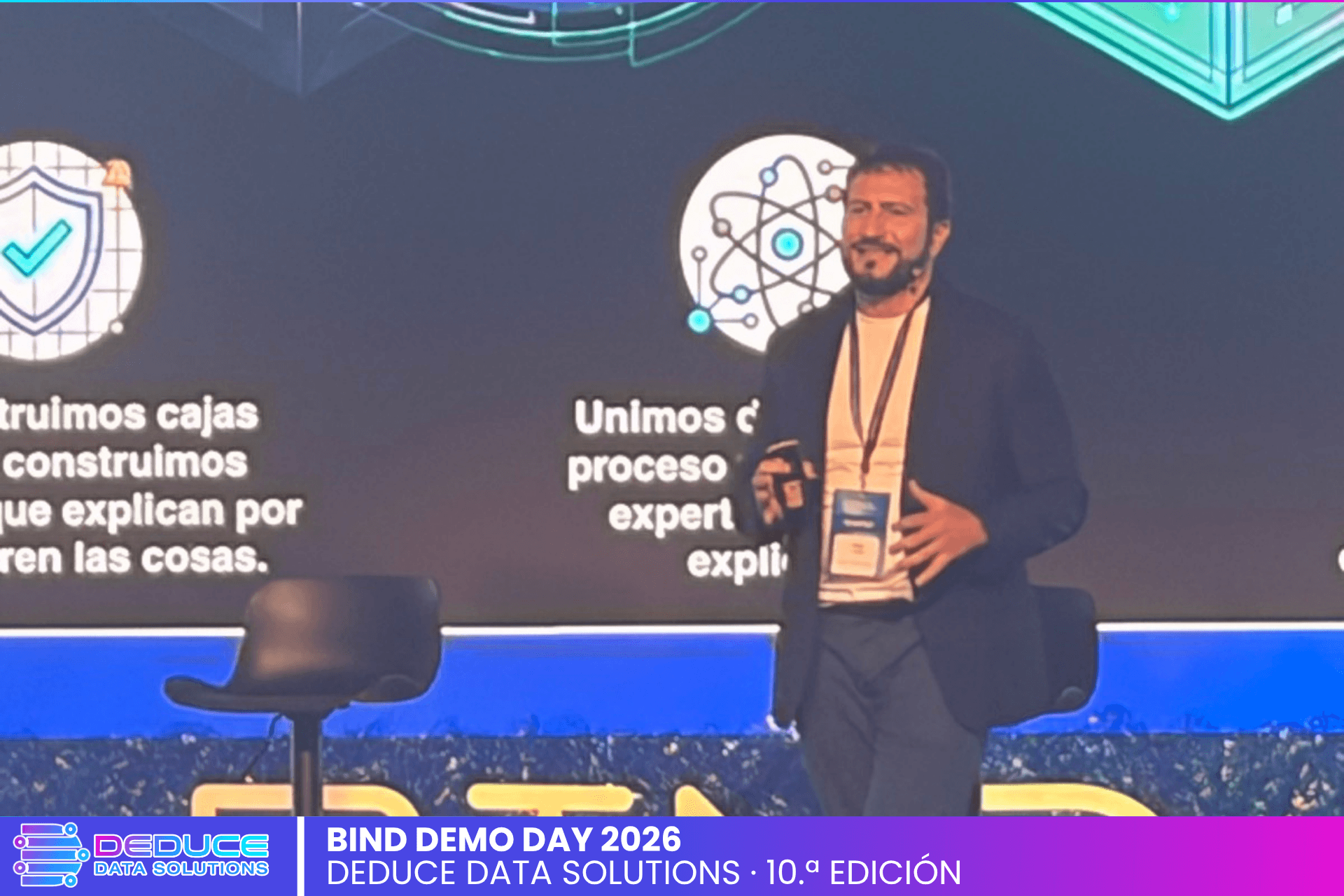
This is where explainable AI (or «XAI») makes the difference. A model that only says “this is going to fail”, without explaining why, leaves the technical team with no room to act. One that also justifies its reasoning allows them to act with judgement.
In a critical industrial environment, traceability is not optional. This is precisely the ground where DDS feels at home: we don’t sell magic, we build auditable evidence that an engineer can review and defend.
Ingeteam, the Industrial Partner in This Alliance
Ingeteam is a Basque business group with more than 80 years of history, specialising in electrical power conversion. It works in power and control electronics, rotating electrical machines and electrical engineering (source: SPRI).
Its activity spans wind energy, solar photovoltaic and hydroelectric power, as well as industry, the naval sector, rail traction, storage, green hydrogen and electric mobility. In the solar field it is an internationally recognised inverter manufacturer (source: Ingeteam).
R&D is in its DNA: according to SPRI, close to 11% of its workforce is dedicated to research and development, with investment close to 5% of its annual turnover. It’s exactly the kind of partner we look for within the BIND programme: a leader with real challenges where AI delivers measurable value.
From the industrial side, Danel Madariaga, of Ingeteam, highlighted the outcome of the five months of joint work:
“They knew how to apply all their statistical and Machine Learning expertise to produce a report that has been extremely valuable for improving our designs and our products. And not just for the technical capability, but also for the human quality. We hope to keep collaborating in the future.
Danel Madariaga, Ingeteam
5 Key Takeaways from the BIND Programme for an Industrial AI Startup
Beyond the Demo Day anecdote, what does an edition of the BIND programme really leave behind? These are the five key takeaways that sum up our experience.
1. A Real Contract, Not a Promise
The BIND programme revolves around projects with a budget and deliverables. For a startup, that means revenue and a verifiable industrial reference, not just a mention in a press release.
2. Validation in a Demanding Environment
Developing with a lead company forces the solution to work with real data and under industrial standards. That kind of validation is hard to achieve any other way, and it accelerates the product’s maturity.
3. Access to a Lead-Company Ecosystem
The programme connects with more than 100 lead companies across northern Spain. For DDS, based in Cantabria, building ties with the Basque industrial fabric is a strategic complement to our national activity.
4. Acceleration Without Giving Up Equity
Mentors, training and access to investors, with no equity and no fees. It’s an unusual model, and a particularly welcome one for a science-based company that wants to grow while keeping control.
5. Visibility and Networking
The Demo Day and the platform’s events provide visibility that translates into business conversations and shared learning with other startups. The network you build carries as much weight as the project itself.
The 11th Edition of the BIND Programme Is Now Open
The story continues. To coincide with the Demo Day, the Basque Government launched the 11th edition of the BIND programme, aimed at startups worldwide with disruptive technologies in smart industry, efficient organisation, commercialisation, and energy and sustainability.
🚀 Applications open. The 11th edition of the BIND programme is accepting applications until 4 September, with more than 100 participating lead companies (including Mercedes-Benz, ITP Aero, Iberdrola, Talgo and Eroski). If you’re the founder of a tech startup, this is your opportunity. More information and registration at bind.spri.eus.
Having lived it from the inside, we recommend it without hesitation. If you know someone this might suit, share this call for applications: the ecosystem grows when information flows.
The Value of a Startup-Industry Alliance
There’s a lot of talk about open innovation, but it’s rarely seen in action this clearly. A startup brings agility, specialised talent and frontier technology; a large industrial company brings scale, real data and a problem worth solving.
When that exchange works, everyone wins. The company gains capabilities it would take years to build internally. The startup gains a solid reference, learning, and often a recurring client that trusts its method.
In the case of industrial artificial intelligence, this formula is especially powerful. Models don’t improve in the lab: they improve with real data and with the judgement of the people who know the plant floor inside out.
For us, every alliance of this kind is also a lesson in humility. However advanced an algorithm may be, its value only appears when it connects with business knowledge and the reality of day-to-day industrial life.
That is, perhaps, the most lasting lesson from this experience. Technology opens the door; collaboration is what makes it worth walking through.
Frequently Asked Questions About the BIND Programme
Who can apply to the BIND programme?
Startups from anywhere in the world with a technology that is already on the market or in its final stage of development, and that can bring value to lead companies. The focus is on smart industry, efficient organisation, commercialisation, and energy and sustainability.
How much does it cost to take part?
Nothing in terms of equity: the programme charges no fees and takes no stake in the startup. The return for the lead company and the startup is the project itself and the business relationship that comes from it.
When is the Demo Day held?
At the close of each edition. The 10th edition’s Demo Day took place on 2 July at the Bilbao Exhibition Centre and brought together startups, companies and institutions from the Basque industrial ecosystem.
Until when is the 11th edition open?
The 11th edition’s application period remains open until 4 September. Registration is done through the platform’s official website.
How is the BIND programme different from other accelerators?
The difference lies in the starting point. Instead of starting with investment or generic training, here you start with a specific industrial challenge from a lead company and a project with a budget. The startup isn’t trying to «fit the market» in the abstract: it solves a real problem for an identified client from day one, and it does so without giving up equity or paying fees.
Conclusion: Explainable AI for the Energy Industry
Our journey through the BIND programme confirms an idea that has guided DDS from the start: artificial intelligence moves the needle when it is applied with scientific rigour, close to the plant floor, and with a commitment to explaining, not just predicting.
If you have an industrial or energy challenge where you think AI can help (energy efficiency, quality, maintenance or failure analysis), let’s talk. You can learn about our approach to energy efficiency with AI and request a no-obligation assessment.
The BIND programme gave us an unbeatable setting to prove it. Now it’s up to us to keep applying it, one industrial project at a time.
Sources
- SPRI Group, «The Basque Government launches the 11th BIND call»: spri.eus
- Bilbao Exhibition Centre, «BEC hosts the 10th edition of the BIND Demo Day»: bilbaoexhibitioncentre.com
- BIND · Open innovation platform (SPRI): bind.spri.eus
- ESMARTCITY, «BIND platform call for applications for Basque companies»: esmartcity.es
- Basque Government (Euskadi.eus), «BIND 4.0 seeks disruptive startups»: euskadi.eus
- SPRI, «Ingeteam, a leading technology company in electrification»: spri.eus
- Ingeteam, Solar photovoltaic energy: ingeteam.com
- Deduce Data Solutions, Awards and recognition: deducedata.solutions
Shall we talk about your data and AI project?
At Deduce Data Solutions we turn data into decisions for industry, with data governance and compliance from day one.
Let’s talk about your case