
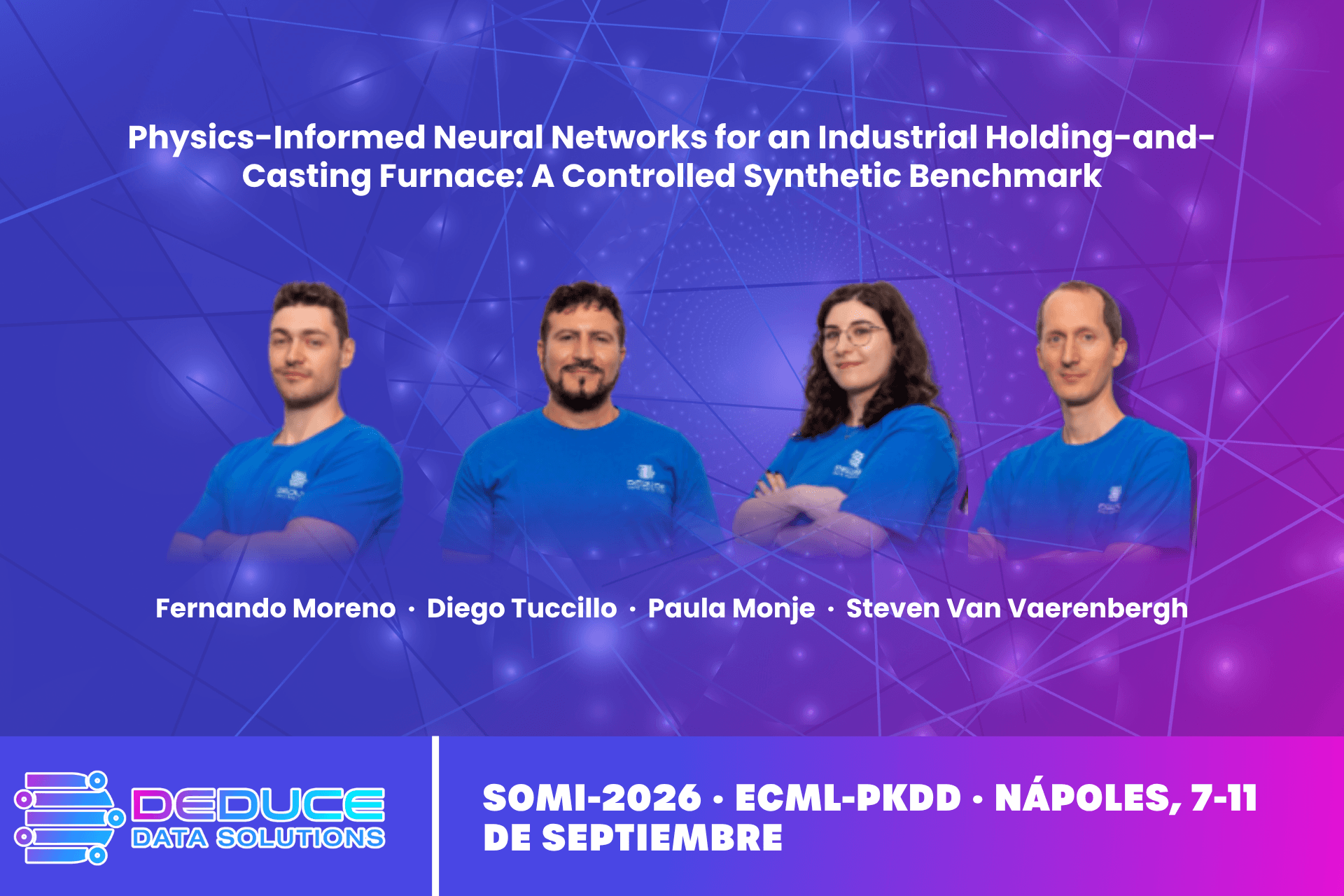
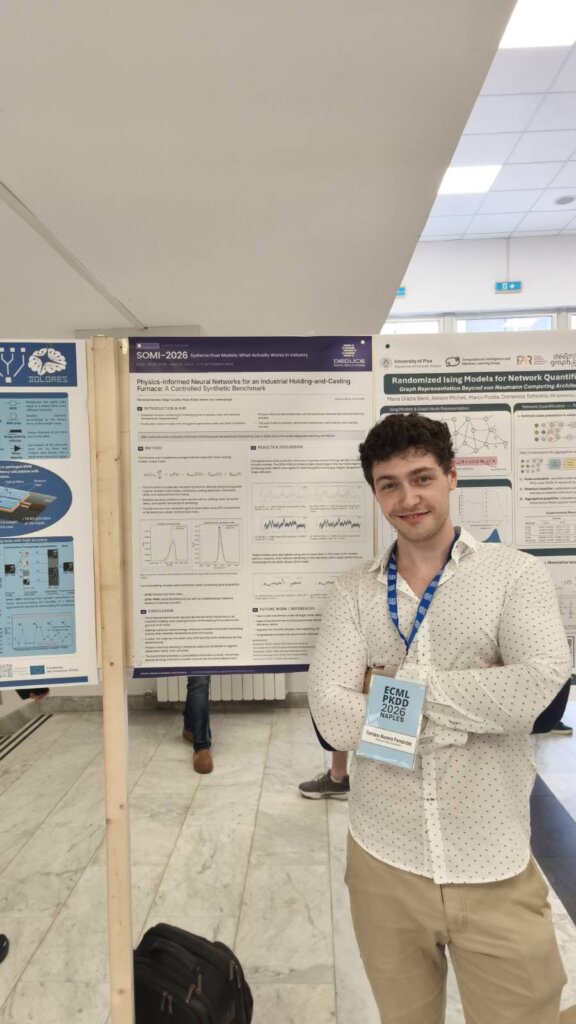
Fernando Moreno, PhD candidate and data scientist at Deduce Data Solutions, presented a poster on Monday 7 September at ECML PKDD 2026 in Naples, comparing two neural networks for predicting the temperature of a holding-and-casting furnace. The work is co-authored by Diego Tuccillo, Paula Monje and Steven Van Vaerenbergh, and was presented at SOMI-2026, the congress workshop dedicated to artificial intelligence that actually works in industry.
In this article
- ECML PKDD 2026 brought European machine learning to Naples
- SOMI-2026, a workshop on what actually works on the plant floor
- A furnace whose temperature is measured rarely and late
- A simulator validated against plant data
- Two identical networks, one with an energy balance
- What the poster leaves open
- Frequently Asked Questions
The poster presented at ECML PKDD 2026 is titled Physics-Informed Neural Networks for an Industrial Holding-and-Casting Furnace: A Controlled Synthetic Benchmark. It answers a question any plant with furnaces has asked when evaluating a predictive model: how many temperature measurements are needed for the network to get it right, and how much it helps to tell it beforehand how heat behaves.
Deduce Data Solutions (DDS), a scientific SME from Santander that grew out of the University of Cantabria, works with physics-informed neural networks on the data the plant already records. The presentation at ECML PKDD 2026 showcased that work to researchers from universities and companies.
01. ECML PKDD 2026 Brought European Machine Learning to Naples
ECML PKDD 2026 ran from 7 to 11 September. The name stands for European Conference on Machine Learning and Principles and Practice of Knowledge Discovery in Databases, Europe’s leading conference in machine learning and data mining. The ECML strand began in 1986 as a working meeting on learning, and PKDD started in 1997. They shared a venue from 2001 and merged into a single annual conference in 2008.
Before ECML PKDD 2026, the conference was held in Porto (2025), Vilnius (2024) and Turin (2023). Selection is demanding: the average acceptance rate for its main research track is around 25%. The ECML PKDD 2026 programme brought together research talks, invited lectures, tutorials, poster sessions, an applied data science track, an industry track and a PhD forum. The themed workshops took place on the Monday and Friday.
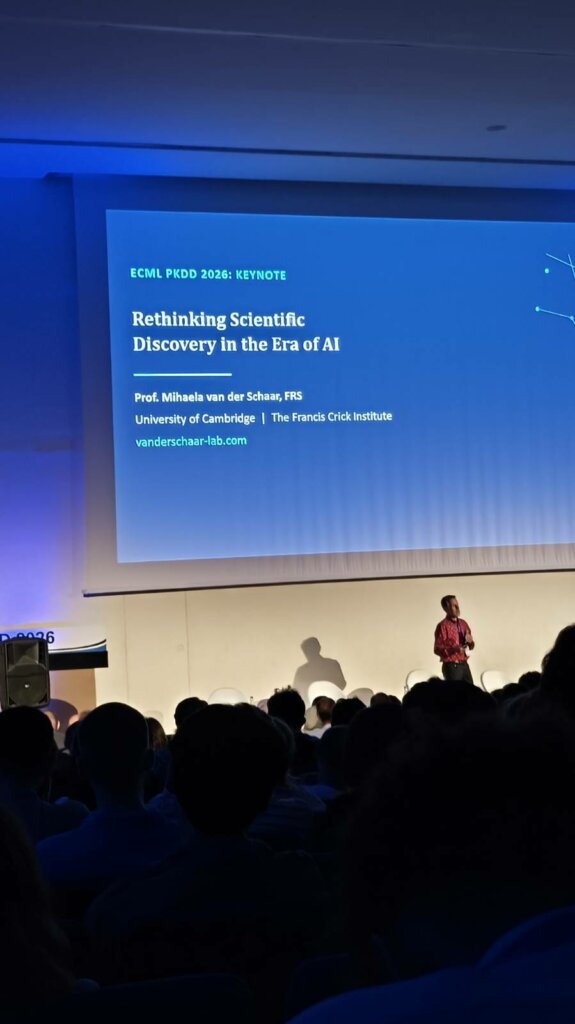
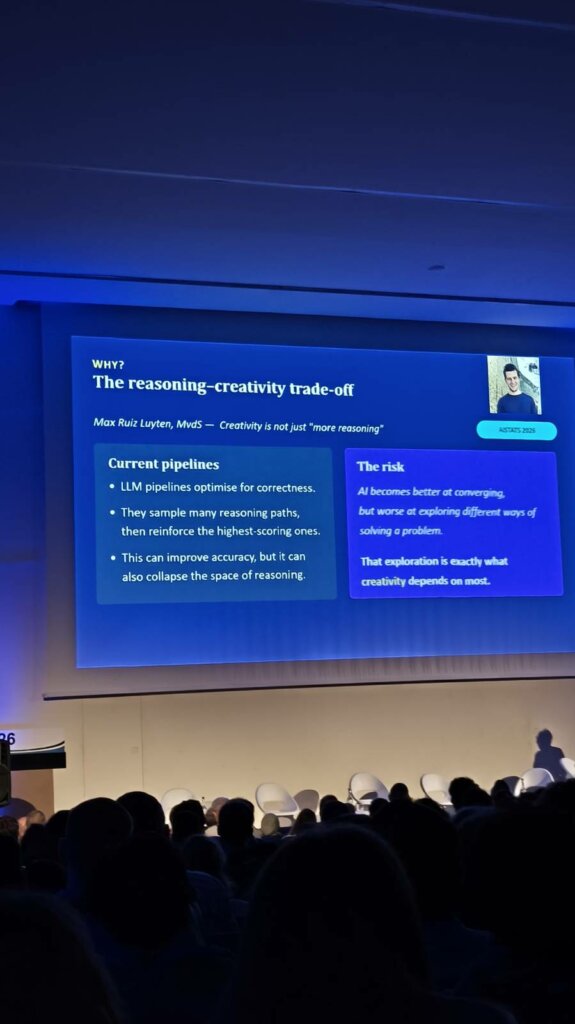
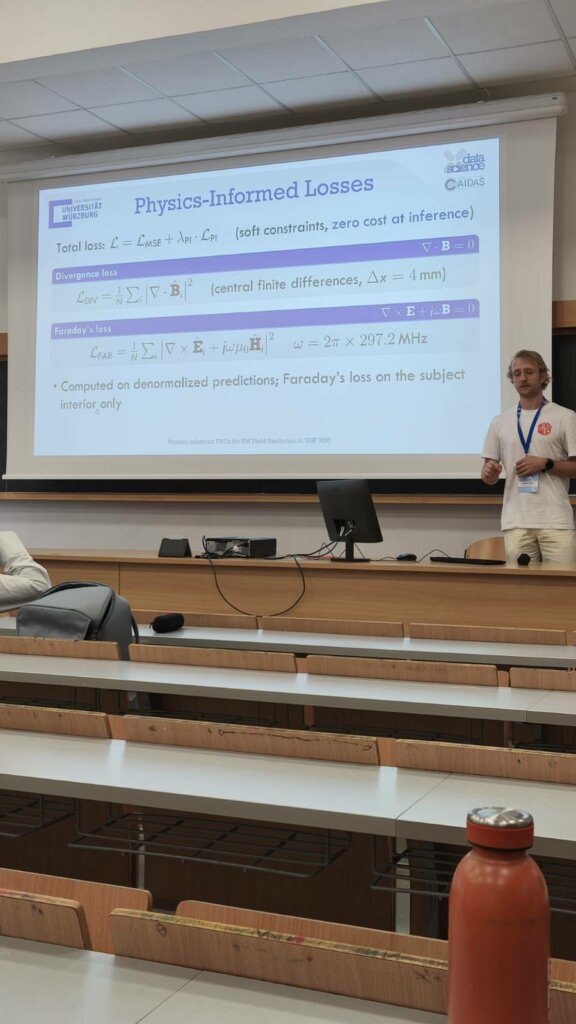
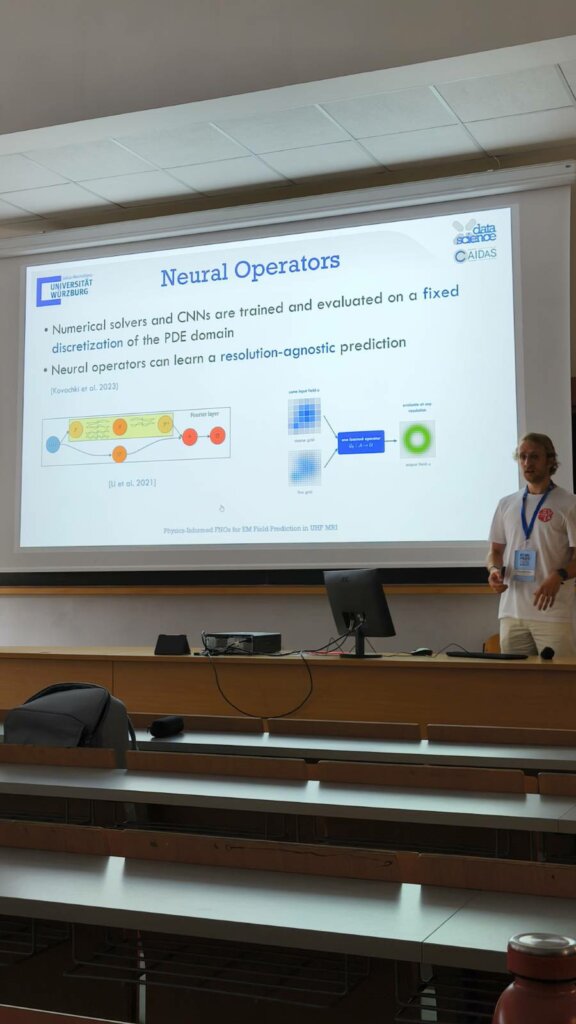
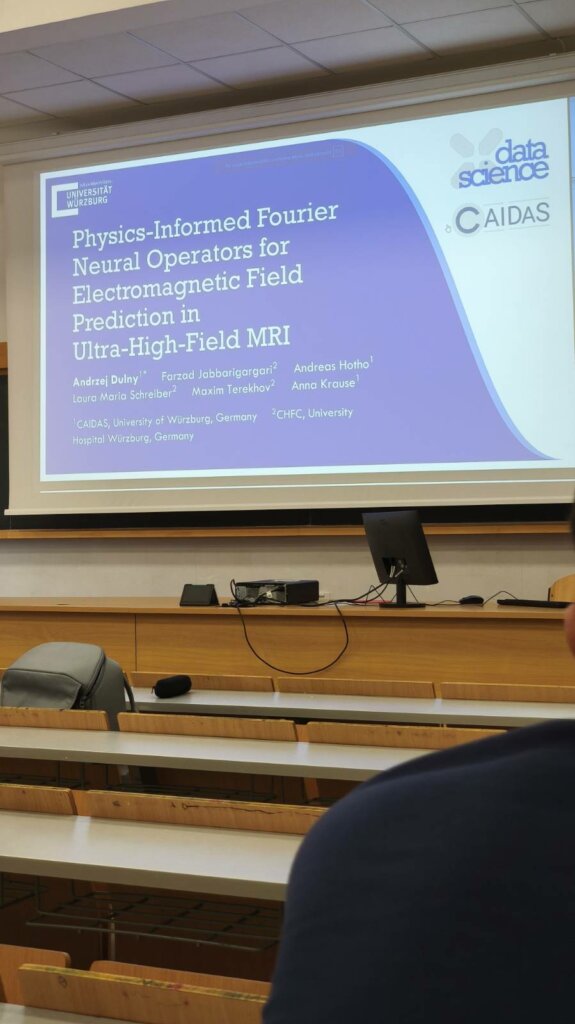
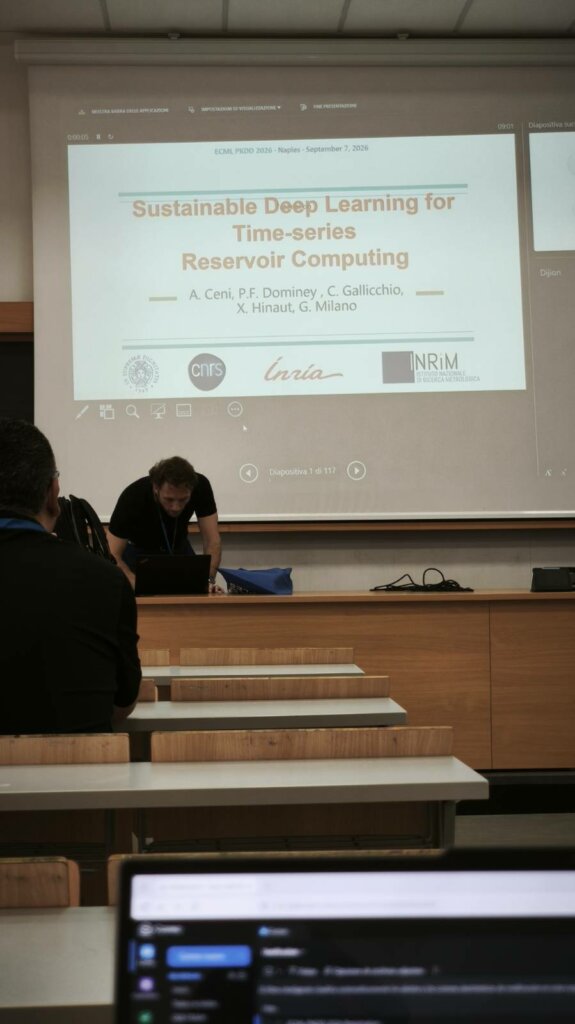
The plenary talk captured in the images was given by Mihaela van der Schaar, professor at the University of Cambridge, titled Rethinking Scientific Discovery in the Era of AI.
02. SOMI-2026, a Workshop on What Actually Works on the Plant Floor
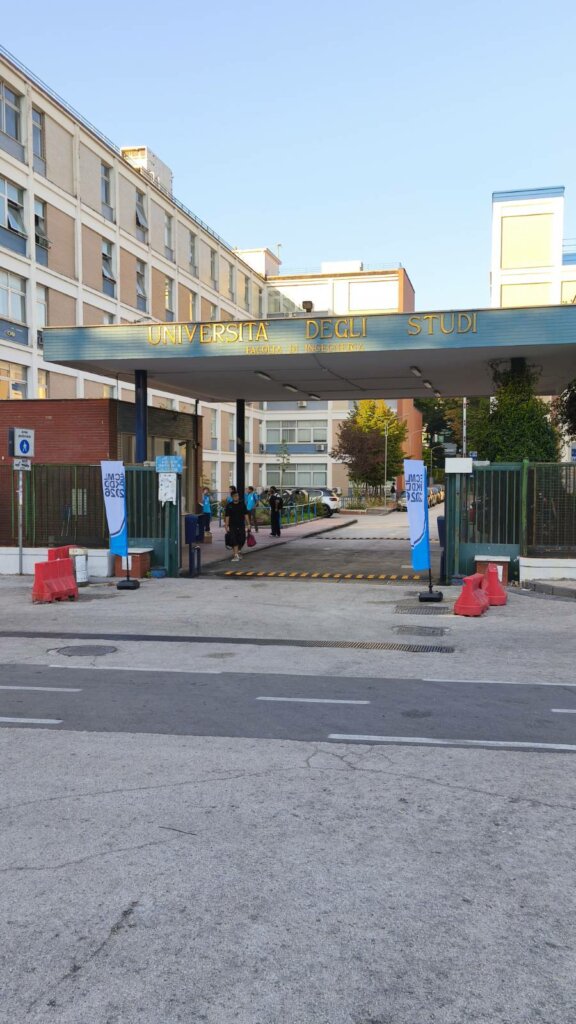
SOMI, one of the ECML PKDD 2026 workshops, takes its name from Systems Over Models: What Actually Works in Industry. The workshop was held on the afternoon of Monday 7 September and was organised by Zahra Taghiyarrenani and Slawomir Nowaczyk, of the CAISR centre at Halmstad University (Sweden), together with Maciej Misiorny, of Sigma Technology Insight Solutions, João Gama (University of Porto), Albert Bifet (University of Waikato) and Martin Atzmüller (Osnabrück University). It is part of the KEEPER and FeelAI projects, co-funded by the Knowledge Foundation and the Swedish innovation agency Vinnova.
The call for papers starts from a fact well known on any factory floor: many prototypes that perform well in the lab fail when faced with imperfect data, changing operating conditions and the cost of getting it wrong in production. The organisers asked authors to treat deployment as an object of scientific study and to report failures with the same rigour as successes.
We are looking for studies that quantify where and why results stop transferring from the lab to the field.SOMI-2026 call for papers
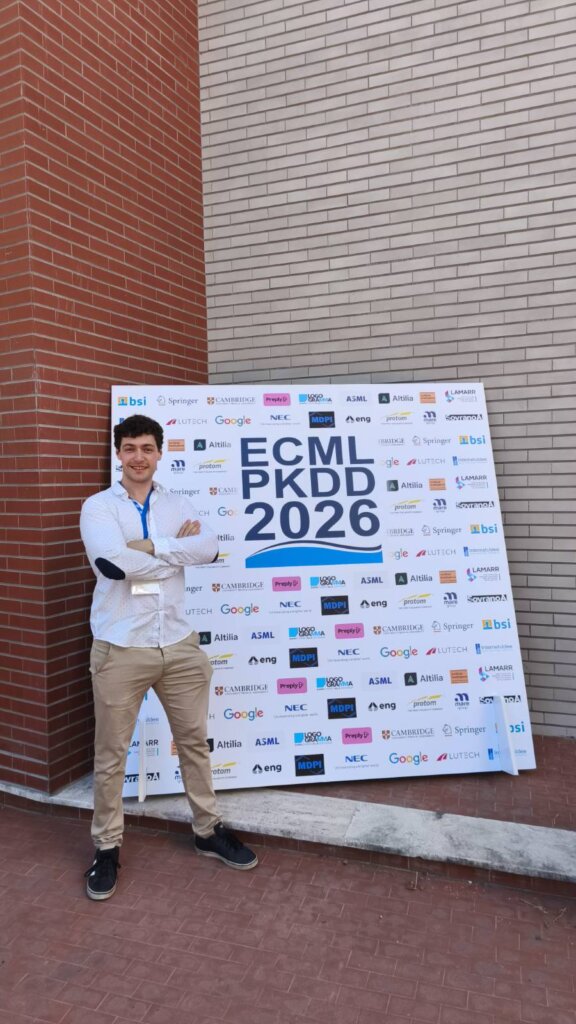
The invited talk was given by Sahar Asadi, Director of AI Labs at King, the video game studio owned by Microsoft Gaming. Under the workshop’s rules, all accepted papers were presented as posters and at least one author had to defend it in person. For DDS this was Fernando Moreno, who attended the poster during the ECML PKDD 2026 session.
03. A Furnace Whose Temperature Is Measured Rarely and Late
A holding-and-casting furnace keeps molten metal at working temperature while it is drawn off for casting. Bath temperature is taken with an immersion pyrometer: a single-point, intrusive and infrequent measurement that also arrives with a delay relative to the metal’s actual state.
With so few readings, a model trained on data alone has little to learn from and ends up predicting values close to the mean. The study presented at ECML PKDD 2026 measures how much the prediction improves when the network is also given the furnace’s energy-balance equation.
04. A Simulator Validated Against Plant Data
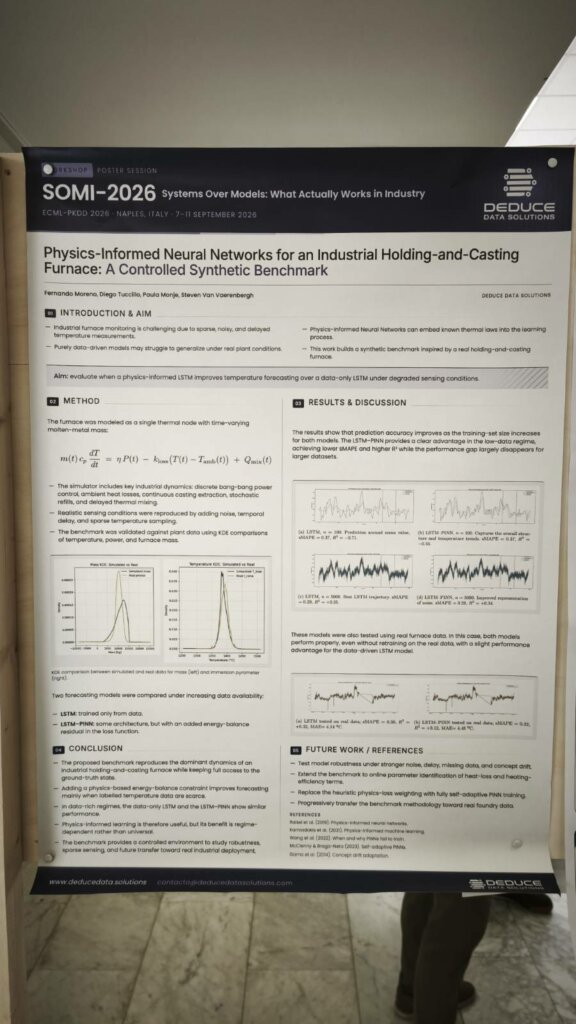
In a plant, the true bath temperature at each instant is never known, so it is impossible to separate the model’s error from the sensor’s error. That is why the team built a synthetic test bench. The furnace is represented as a single thermal node whose metal mass changes over time.
The equation governing the simulator
m(t)·cp·dT/dt = η·P(t) − kloss·(T(t) − Tamb(t)) + Qmix(t). On the left, the energy accumulated by the bath. On the right, the power supplied with its efficiency, the losses to the environment, and the heat released when new metal mixes with what was already there.
The simulator reproduces on/off power control, heat losses, continuous extraction through casting, metal top-ups at irregular intervals, and thermal mixing with delay. Noise, delay and sparse sampling are added to the temperature signal so the networks see what an actual pyrometer would deliver.
To check that the bench resembles reality, the authors compared the simulated distributions of temperature, power and mass with those of a real furnace using kernel density estimation (KDE, Kernel Density Estimation). The simulated temperature, centred around 1,400°C, overlaps well with the pyrometer’s. The simulated mass comes out somewhat more spread out than the real one.
05. Two Identical Networks, One With an Energy Balance
Two models were trained with increasing amounts of data. The first is an LSTM network (Long Short-Term Memory, a recurrent architecture designed for time series) that learns only from the measurements. The second, LSTM–PINN, has the same architecture and adds the residual of the equation above to its loss function: the network is penalised whenever its prediction breaks the energy balance. Since they share an architecture, any difference between the two is due to that physics term.
Performance was measured with sMAPE (symmetric mean absolute percentage error, lower is better) and with the coefficient of determination R², which is negative when the model predicts worse than the mean of the data.
With 100 training points, both networks achieve an sMAPE of 0.37, but the LSTM stays at an R² of −0.71 and predicts around the mean value, while the LSTM–PINN rises to −0.55 and captures temperature trends. With 5,000 points the advantage disappears: both score an sMAPE of 0.29 and an R² of 0.35 and 0.34.
The poster taken to ECML PKDD 2026 includes a further test. The two models, trained on the simulator, were applied to data from a real furnace without retraining. Both responded correctly. The LSTM achieved a mean absolute error of 4.14°C and an R² of 0.32, and the LSTM–PINN, 4.48°C and 0.12. In this test, the network without physics performed slightly better.
06. What the Poster Leaves Open
The authors’ conclusion is that physics-informed learning helps mainly when labelled measurements are scarce, and that with abundant data the two networks perform equally. For a foundry, where every immersion-pyrometer reading costs time and consumables, the usual case is one of scarce data. Publishing also the test in which the physics variant falls behind reflects what SOMI-2026 asked for: stating with figures how far a method actually goes.
Following ECML PKDD 2026, the team sets out four lines of future work:
- Test the models with more noise, more delay, missing data and process drift (concept drift).
- Identify online the parameters for heat losses and heating efficiency.
- Replace the heuristic weighting of the physics term with self-adaptive training, along the lines of McClenny and Braga-Neto (2023).
- Transfer the methodology, step by step, to real foundry data.
An earlier version of the study was presented in July at the Entropy 2026 congress in Barcelona. The ECML PKDD 2026 version adds Steven Van Vaerenbergh as a co-author.
Let’s Talk About the Data Your Plant Already Records
A 30-minute meeting with the DDS team to review which variables your process measures, how often, and what can be predicted from them.
Contact DDSFrequently Asked Questions
What Is ECML PKDD 2026?
It is the 2026 edition of the European Conference on Machine Learning and Principles and Practice of Knowledge Discovery in Databases, Europe’s conference on machine learning and data mining. It was held in Naples from 7 to 11 September 2026.
What Is the SOMI-2026 Workshop?
Systems Over Models: What Actually Works in Industry is an ECML PKDD 2026 workshop organised from Halmstad University with researchers from Porto, Waikato and Osnabrück. It brings together work on deploying machine learning models under real industrial conditions, including negative results.
Who Authored Deduce Data Solutions’ Poster at ECML PKDD 2026?
Fernando Moreno, Diego Tuccillo, Paula Monje and Steven Van Vaerenbergh. It was presented in Naples by Fernando Moreno, PhD candidate and data scientist at DDS.
What Is a Physics-Informed Neural Network?
A network that, in addition to fitting the data, is penalised when its predictions break a known equation of the process. In this work, that equation is the furnace’s energy balance. The concept was formalised by Raissi and colleagues in 2019.
When Is It Worth Adding Physics to the Model?
According to the poster’s results, when there are few labelled measurements. With 100 training points, the network with the energy balance captures trends that the conventional network misses. With 5,000 points, the two perform equally.
Keep reading: Industrial AI at Entropy 2026: DDS’s Research · More news on the DDS blog